

Models on board
Edge computing
Harpe puts its vision and coordination models on board. It delivers the software with an SDK and the manufacturer integrates it into its drone: Harpe does not build or sell drones.
- On-board detection
- Swarms over a mesh network
- Works without a link
- Software for the client's drone
From the drone to Atria
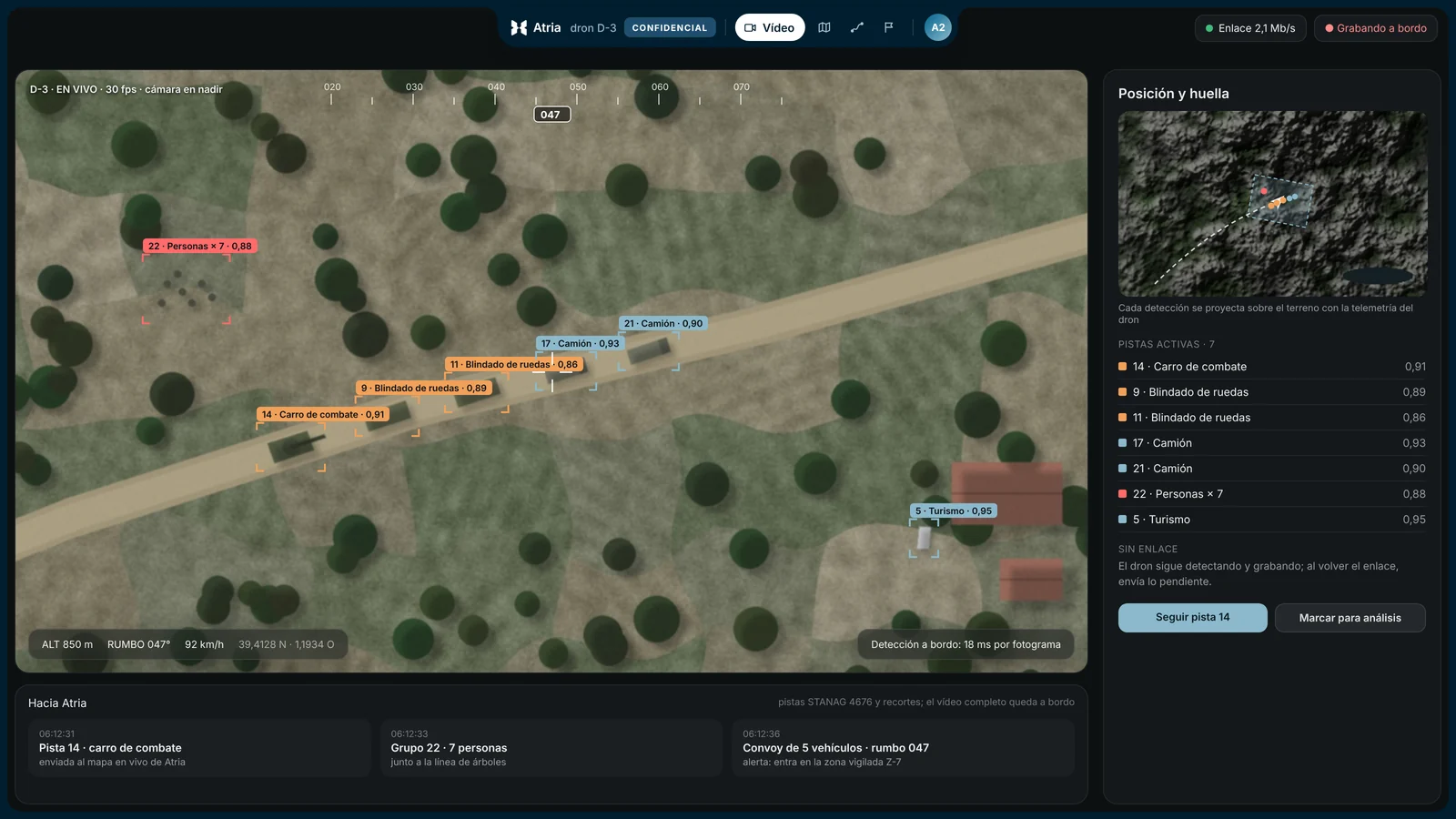
From the drone to Atria's live map in seconds

- Capture
The drone's camera records and logs its position and orientation.
- On board
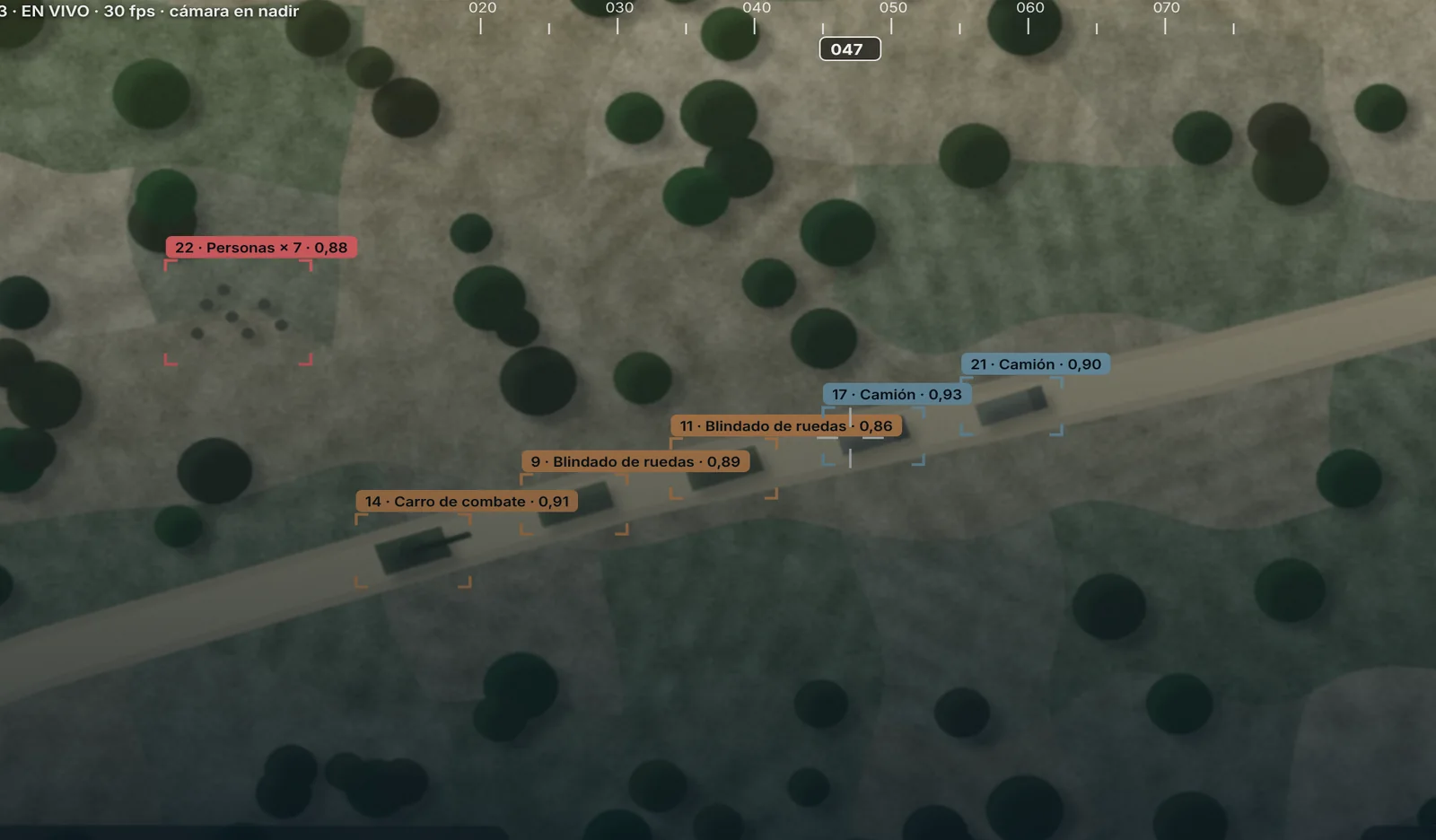
The model detects and tracks targets on the drone's computer.
- Ground
Every detection gets its coordinates on the map.
- Link
The drone sends tracks and crops and keeps the full video.
- Atria
Atria cross-references the tracks with AIS, satellite imagery, intercepts and registers.
Swarms
Software that coordinates drone swarms over a mesh network
On board
Harpe's vision model perceives on each drone's computer.
Mesh network
The drones talk to each other without infrastructure; if one goes down, the network reorganises itself.
Coordination
The drones share out the tasks and replan in the face of the unexpected or interference.
Data fusion
The software merges what each drone captures into a common picture that feeds Atria.
Operator
The operator defines the mission and follows it on a screen.
Algorithms for the client's drone. Harpe delivers the coordination software with an SDK; the manufacturer or integrator builds it into its drone.
Training in simulation. Harpe trains coordination with reinforcement learning in the world simulator before flying, with interference and drone losses.
Deployment
The client flies with its software and its models
Harpe delivers the signed software and models, and updates them without seeing the mission data.
Deployment
- On the client's premises, with no connection to Harpe
- Off-the-shelf hardware in the client's server room
- Signed updates, with no service downtime
- Support without seeing the data
Interoperability
- NATO image, video and track formats
- NATO classification markings
- Military messaging and command and control
- API and SDK for the client's systems
Regulatory framework
- Spanish Official Secrets Act
- CCN certification and accreditation
- Data protection
- Regulation (EU) 2024/1689 and export control
Other products
The same technology on other missions
Protects computers, servers, cloud, identities and physical assets such as fleets and drones. It stops a new attack by what it does and prevents data leaks.
For: Banks, hospitals, ministries, police forces and companies
< 1 %CPU at idle, targetCross-references everything the agency knows on a live map, flags what does not add up and cites the source of every sentence, on the agency's premises.
For: Intelligence and security agencies
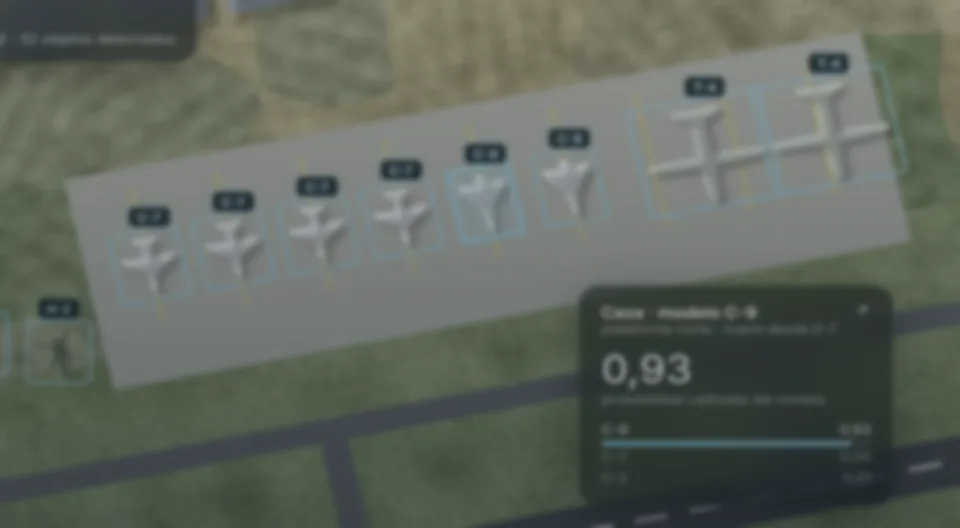
8data typesDetects aircraft, vehicles and vessels by model, tracks mass movements and searches for objects, buildings and streets.
For: Intelligence and defence
4sources: optical, SAR, aircraft and drone

Request a demo of Edge computing
Harpe runs it on data from its simulator and its lab, at your premises.